Book Appointment Now

CNC Aluminum Machining Services: A Practical Guide to Precision, Cost, and Reliability
Introduction
If you’re sourcing CNC aluminum machining services, you’re not just buying parts—you’re choosing a manufacturing partner that directly affects your product quality, cost, and delivery timeline.
In industries like electronics, automotive, medical, and robotics, aluminum components often require tight tolerances, clean surface finishes, and consistent batch production. The challenge is not machining itself—it’s finding a supplier who can deliver stable quality at scale.
This guide breaks down what actually matters when working with a CNC aluminum machining supplier.
Why Aluminum Is the First Choice for CNC Machining
Aluminum is one of the most commonly used materials in CNC machining for a reason. It balances performance and cost better than most metals.
Here’s why engineers prefer aluminum:
- Easy to machine → faster production and lower cost
- Lightweight → ideal for performance-driven applications
- Corrosion-resistant → suitable for outdoor and industrial use
- Good thermal conductivity → widely used in heat dissipation parts
For most projects, 6061 aluminum is the default choice. For higher strength requirements, 7075 aluminum is often used.
What Defines High-Quality CNC Aluminum Machining Services
Not all suppliers are the same. From a buyer’s perspective, these are the key factors that actually make a difference:
1. Tolerance Control (Not Just Claims)
Many suppliers say “high precision,” but what matters is consistency.
Typical requirements:
- General tolerance: ±0.02 mm
- Precision parts: ±0.01 mm or tighter
Ask if they can maintain tolerance across batch production, not just samples.
2. Surface Finish Quality
For many applications, appearance and functionality depend on finishing:
- Anodizing (clear / black / color)
- Sandblasting for uniform texture
- Brushing or polishing
- Hard anodizing for wear resistance
Poor surface finishing is one of the most common issues in outsourced machining.
3. Engineering Support (DFM Matters More Than You Think)
A good supplier doesn’t just produce parts—they help improve them.
Design for Manufacturability (DFM) can:
- Reduce machining cost
- Improve structural strength
- Shorten lead time
If your supplier doesn’t give feedback on your drawings, that’s a red flag.
4. Production Stability
Prototyping is easy. Mass production is where problems happen.
Reliable CNC aluminum machining services should offer:
- Stable fixtures and machining processes
- Consistent quality across batches
- Clear production timeline
- On-time delivery
From Prototype to Mass Production: What to Expect
A typical CNC aluminum machining workflow looks like this:
- Drawing review (STEP / STP / PDF)
- Quotation and technical confirmation
- DFM feedback (if needed)
- Prototype machining
- Sample approval
- Batch production
- Final inspection and shipping
A structured process reduces errors and improves efficiency.
Real Case Example
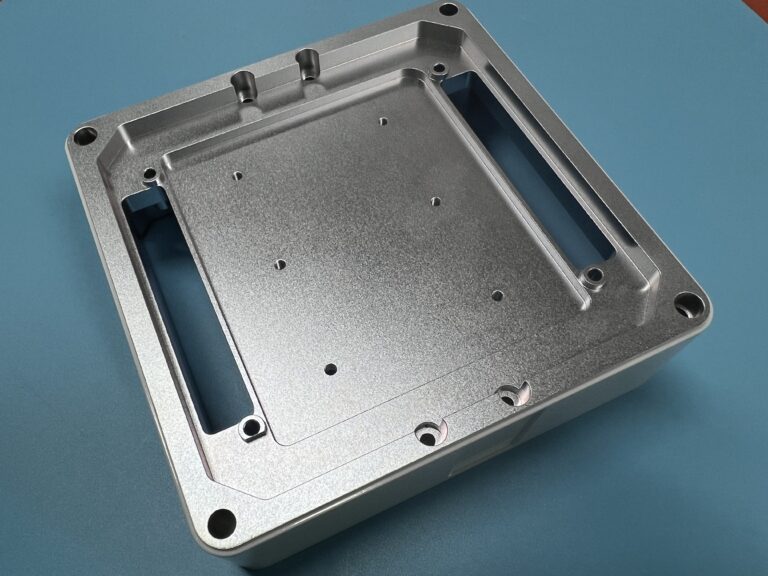
Case Study – Custom Aluminum Housing for Consumer Electronics
A client developing a new electronic device needed a lightweight aluminum housing with tight dimensional accuracy and a high-quality anodized finish.
During the initial review, the machining team identified sharp internal corners that would increase tool wear and cost. By slightly adjusting the design radius and optimizing machining paths, production time was reduced by 18%.
The final parts achieved consistent tolerance within ±0.01 mm, and the anodized surface passed all cosmetic inspections. The project moved from prototype to mass production within 4 weeks.
Common Mistakes When Choosing CNC Aluminum Machining Services
Many buyers run into the same issues:
- Choosing based on lowest price only
- Ignoring communication efficiency
- Not confirming tolerance standards clearly
- Skipping sample validation
- Overlooking surface finish details
A slightly higher unit price often saves cost in the long run by avoiding defects and delays.
How to Choose the Right CNC Aluminum Machining Supplier
Before making a decision, check:
- Experience with similar parts or industries
- Available CNC equipment (3/4/5-axis)
- Inspection capability (CMM, gauges)
- Certifications (ISO, IATF, etc.)
- Response speed and communication clarity
A reliable supplier will act more like an extension of your engineering team.
Conclusion
Choosing the right CNC aluminum machining services is about more than just price. It’s about finding a partner who understands your requirements, communicates clearly, and delivers consistent quality.
With the right supplier, you can reduce costs, improve product performance, and scale production with confidence.