Book Appointment Now

Aluminum 6061 CNC Machining: Precision Parts for Custom Manufacturing
Aluminum 6061 CNC machining provides an excellent combination of machinability, strength, corrosion resistance, and surface finish. Learn how 6061 and 6061-T6 aluminum are CNC milled and turned into high-precision custom parts, from prototypes to production quantities.
What Is Aluminum 6061 CNC Machining?
Aluminum 6061 CNC machining is the process of manufacturing precision components from 6061 aluminum alloy using computer-controlled milling, turning, drilling, and multi-axis machining equipment.
6061 is one of the most widely used aluminum alloys for CNC machining because it combines good mechanical properties with excellent machinability.
For manufacturers and product developers, it is particularly suitable for parts that require:
- Tight dimensional tolerances
- Complex geometries
- Good strength-to-weight ratio
- Excellent corrosion resistance
- High-quality surface finishes
- Anodizing or other secondary finishing
- Consistent performance in production
6061-T6 is especially common for precision CNC machined aluminum parts because the T6 temper provides increased strength while retaining good machinability.
Why Is 6061 Aluminum So Popular for CNC Machining?
Choosing the correct aluminum grade can have a significant impact on machining cost, dimensional stability, surface quality, and final part performance.
6061 aluminum offers a strong balance across these requirements.
1. Excellent Machinability
6061 aluminum responds well to CNC milling, turning, drilling, tapping, and boring.
With appropriate cutting parameters and tooling, manufacturers can achieve clean edges, accurate features, and consistent dimensions.
This makes 6061 aluminum CNC machining suitable for both simple components and more complicated precision parts.
2. Good Strength-to-Weight Ratio
6061-T6 provides significantly higher strength than many softer aluminum grades while remaining lightweight.
This makes it useful for structural components, housings, brackets, frames, supports, and other parts where reducing weight is important.
3. Good Dimensional Stability
Dimensional stability is especially important when machining components with multiple holes, pockets, thin walls, or tight positional requirements.
A controlled CNC machining process can help maintain dimensional consistency throughout prototype and production runs.
4. Excellent Corrosion Resistance
6061 aluminum naturally offers good corrosion resistance.
Additional surface treatments such as anodizing can further improve corrosion resistance while providing different cosmetic appearances.
5. Excellent Surface Finishing Options
6061 CNC machined parts can be supplied with a wide range of finishes, including:
- As-machined
- Bead blasting
- Anodizing
- Hard anodizing
- Black anodizing
- Chemical conversion coating
- Polishing
- Powder coating
This flexibility makes 6061 suitable for both functional internal components and visible exterior parts.
6061 vs. 6061-T6 Aluminum
6061 refers to the aluminum alloy itself, while 6061-T6 describes 6061 aluminum that has undergone solution heat treatment and artificial aging.
For CNC machining projects, 6061-T6 is one of the most frequently specified conditions.
| Property | 6061 Aluminum | 6061-T6 Aluminum |
|---|---|---|
| Machinability | Good | Excellent |
| Strength | Moderate | Higher |
| Corrosion Resistance | Excellent | Excellent |
| Anodizing | Excellent | Excellent |
| CNC Milling | Suitable | Highly Suitable |
| CNC Turning | Suitable | Highly Suitable |
| Typical Use | General Parts | Precision & Structural Parts |
The final material selection should always be based on the mechanical, dimensional, environmental, and finishing requirements specified on the engineering drawing.
CNC Machining Processes for 6061 Aluminum
Different part geometries require different machining strategies.
CNC Milling 6061 Aluminum
CNC milling is commonly used for manufacturing 6061 aluminum parts with pockets, holes, slots, threads, flat surfaces, contours, and complex profiles.
Typical products include:
- Aluminum housings
- Electronic enclosures
- Mounting brackets
- Base plates
- Structural components
- Heat dissipation components
- Precision frames
- Custom mechanical components
For more complex geometries, multi-axis machining can reduce the number of setups required and improve feature-to-feature consistency.
CNC Turning 6061 Aluminum
CNC turning is suitable for rotational 6061 aluminum components such as:
- Shafts
- Bushings
- Sleeves
- Rings
- Spacers
- Connectors
- Threaded components
- Cylindrical housings
For parts containing both turned and milled features, combined machining processes can reduce repeated positioning and improve production efficiency.
5-Axis CNC Machining for 6061 Aluminum
Complex aluminum parts may contain multiple surfaces, angled holes, deep pockets, curved profiles, or features located on several sides of the component.
5-axis CNC machining allows the cutting tool to approach the workpiece from multiple directions.
This can provide several advantages:
- Fewer setups
- Reduced repositioning errors
- Better feature alignment
- Improved machining efficiency
- Greater flexibility for complex geometries
- Better consistency for precision parts
For complicated 6061 aluminum CNC machining parts, selecting the correct machining strategy can be just as important as selecting the material itself.
What Tolerances Can Be Achieved in 6061 Aluminum CNC Machining?
Tolerance capability depends on part size, geometry, wall thickness, feature location, machining process, tooling, and inspection requirements.
For high-precision 6061 aluminum components, critical dimensions may require tolerances down to approximately ±0.005 mm under appropriate machining conditions.
However, not every dimension requires an extremely tight tolerance.
Applying unnecessary tight tolerances can significantly increase machining and inspection costs.
A better approach is to identify the truly critical dimensions on the engineering drawing and apply appropriate tolerances according to the functional requirements of the component.
Surface Finish for CNC Machined 6061 Aluminum
Surface finish is another important consideration when designing CNC aluminum parts.
Depending on machining parameters, tooling, part geometry, and finishing requirements, precision machining can produce smooth and consistent surfaces.
For demanding components, surface roughness can reach approximately Ra 0.2 μm under suitable processing conditions.
If appearance or additional protection is required, anodizing is one of the most common secondary processes for 6061 aluminum.
Black, clear, and other anodized finishes can be selected according to the application and design requirements.
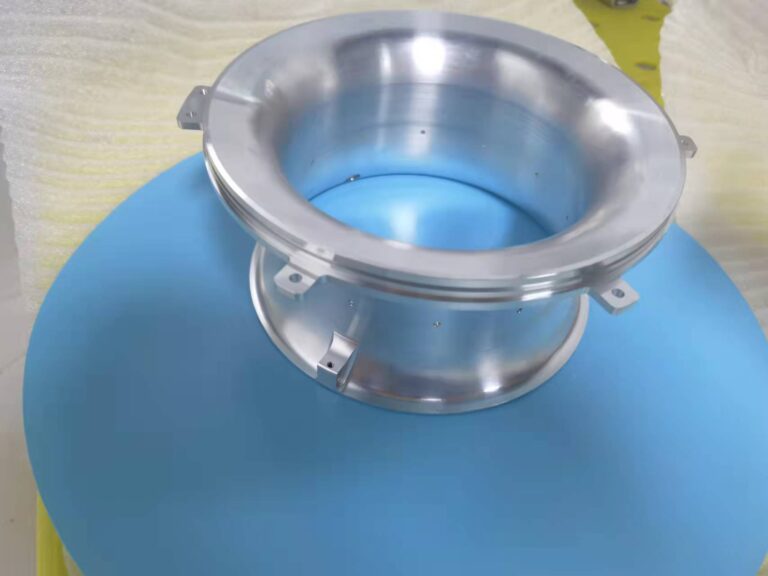
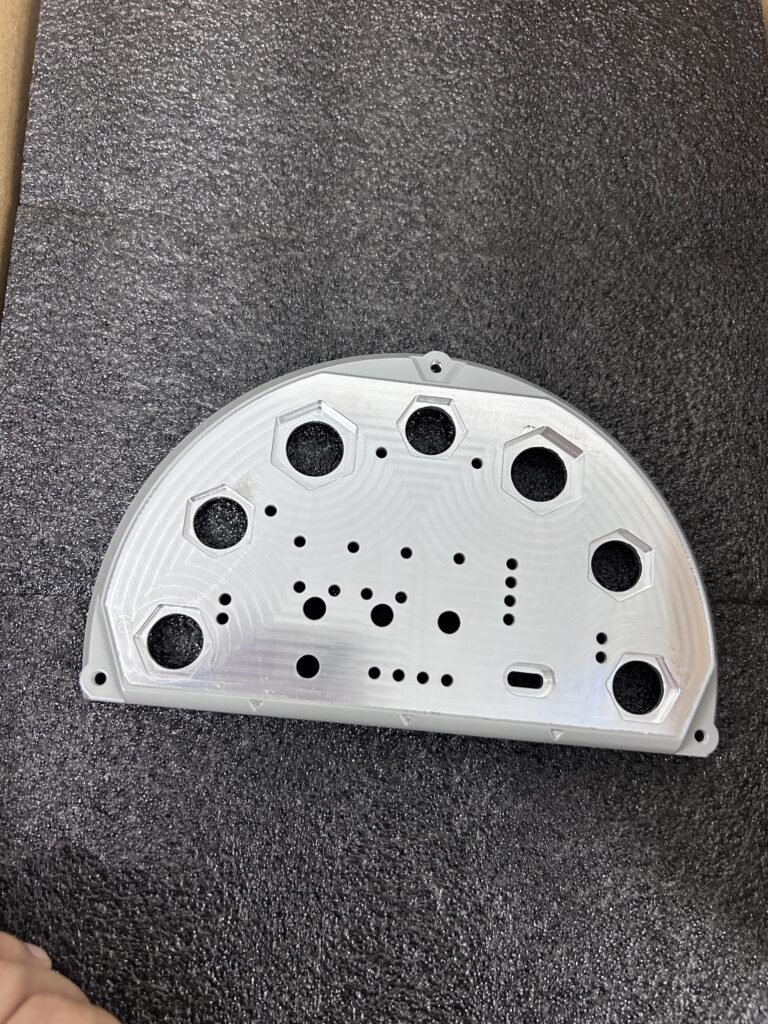
Real Manufacturing Case: Precision 6061 Aluminum Housing
A customer required a custom 6061-T6 aluminum housing with multiple precision holes, internal pockets, thin-wall areas, and strict positional requirements.
The main challenge was maintaining dimensional stability after removing a large amount of material from the aluminum blank.
Our engineering team reviewed the drawings and optimized the machining sequence before production.
Instead of removing all material in one operation, the component was machined in controlled stages to reduce internal stress and deformation.
Multi-axis machining was then used for critical features to reduce repeated clamping.
After machining, critical dimensions and geometric features were verified using precision inspection equipment, including a Zeiss CMM.
The completed parts met the required dimensional specifications and proceeded to surface finishing and final inspection before shipment.
This project demonstrated how machining strategy, workholding, process control, and inspection work together in high-precision Aluminum 6061 CNC machining.
Quality Inspection for 6061 CNC Machined Parts
Precision machining does not end when the component leaves the CNC machine.
Inspection is an essential part of the manufacturing process.
Depending on drawing requirements, inspection can include:
- Dimensional inspection
- CMM inspection
- Height measurement
- Surface roughness inspection
- Thread inspection
- Hole position inspection
- Geometric tolerance verification
- Visual surface inspection
Our manufacturing facility is equipped with more than 20 inspection and measurement devices, including Zeiss CMM equipment, to support dimensional verification throughout production.
From Prototype to Production
Different customers have different production requirements.
Some projects require only a small number of prototype components for design validation, while others require stable repeat production.
Our Aluminum 6061 CNC machining services support:
Prototype → Engineering Validation → Small Batch → Production → Inspection → Surface Finishing → Delivery
Keeping these processes under controlled manufacturing procedures helps maintain consistency as projects move from development into production.
Why Choose Us for Aluminum 6061 CNC Machining?
Founded in 1998, we specialize in precision CNC machining and custom metal component manufacturing.
Our manufacturing capabilities include:
- 25+ years of manufacturing experience
- 10,000+ m² manufacturing facility
- 150+ employees
- Approximately 320 manufacturing machines
- 3-axis, 4-axis, and 5-axis CNC machining
- CNC milling and CNC turning
- Precision capability down to ±0.005 mm for suitable features
- More than 20 inspection devices
- Zeiss CMM inspection
- AS9100, IATF 16949, and ISO 13485 certified quality systems
- Prototype and production manufacturing
- Multiple aluminum surface finishing options
We focus on manufacturing precision aluminum components according to customer drawings, CAD models, tolerances, materials, and finishing specifications.
Aluminum 6061 CNC Machining FAQs
Is 6061 aluminum good for CNC machining?
Yes. 6061 is one of the most commonly used aluminum alloys for CNC machining because of its excellent machinability, good strength, corrosion resistance, dimensional stability, and finishing options.
What is the difference between 6061 and 7075 aluminum?
6061 generally offers excellent machinability, corrosion resistance, and cost efficiency. 7075 provides higher strength but is typically more expensive. The correct material depends on the mechanical and environmental requirements of the component.
Can 6061 aluminum be anodized after CNC machining?
Yes. 6061 aluminum is well suited to anodizing. Clear, black, hard anodized, and other finishing options can be selected depending on the design requirements.
Can you CNC machine thin-wall 6061 aluminum parts?
Yes, but thin-wall components require careful consideration of workholding, cutting forces, machining sequence, heat, and deformation. The machining strategy should be optimized according to the actual geometry.
Do you provide 5-axis CNC machining for 6061 aluminum?
Yes. 5-axis CNC machining is suitable for complex 6061 aluminum parts that contain multi-sided features, angled surfaces, complex contours, or features requiring fewer setups.
What information is required for a quotation?
For an accurate quotation, customers should ideally provide:
- 2D engineering drawings
- 3D CAD files
- Material specification
- Required quantity
- Dimensional tolerances
- Surface finish requirements
- Special inspection requirements
Request a Quote for 6061 Aluminum CNC Machining
Looking for a reliable manufacturer for Aluminum 6061 CNC Machining?
Send us your engineering drawings or 3D CAD files. Our engineering team can review the material, geometry, tolerances, machining process, surface finishing, and inspection requirements before quotation.
Whether you need a prototype, small batch, or production quantity, we provide custom 6061 aluminum CNC machining solutions based on your specific drawing requirements.